Hexarelin 2mg/5mg
Hexarelin – a hexapeptide and ghrelin receptor agonist studied for GH release and cardiac effects. Price and batch analysis.
35.00 EUR · In stock
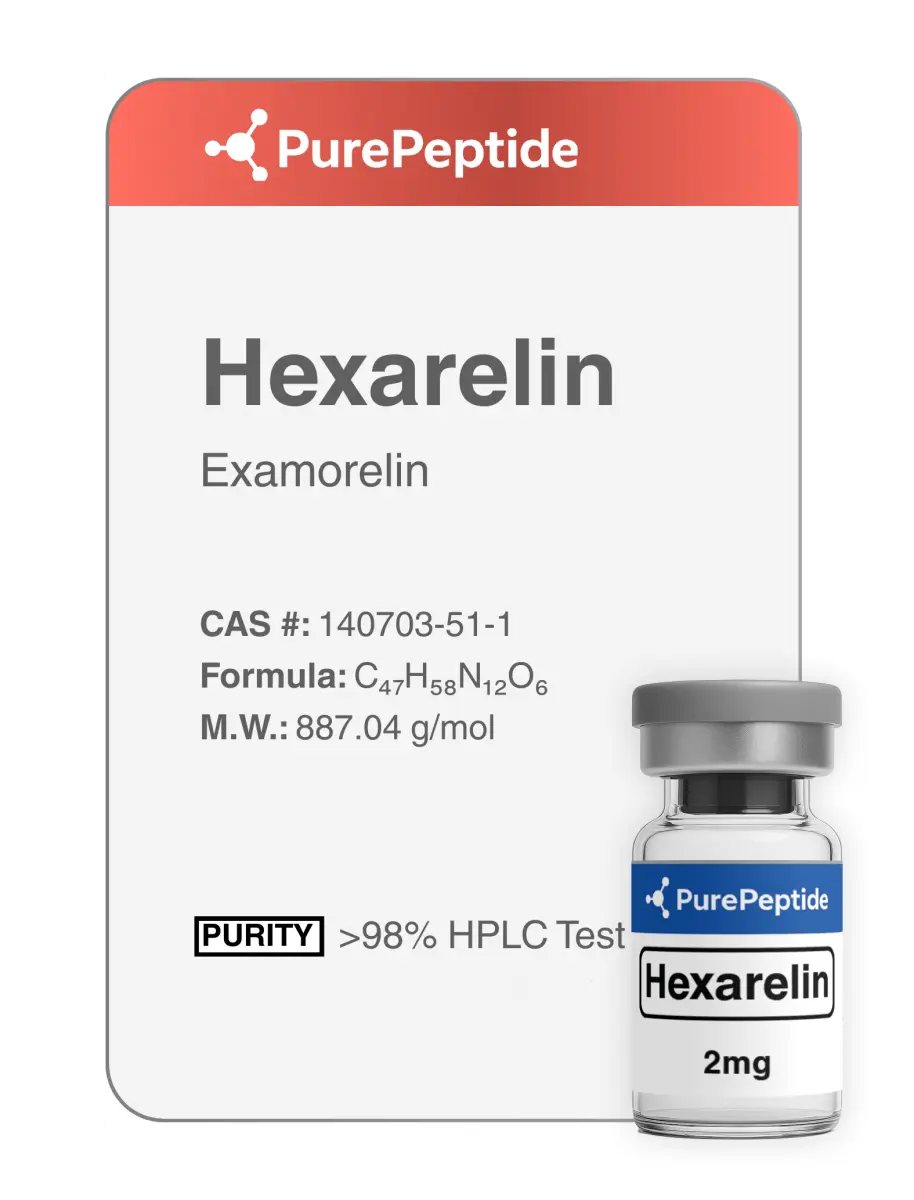
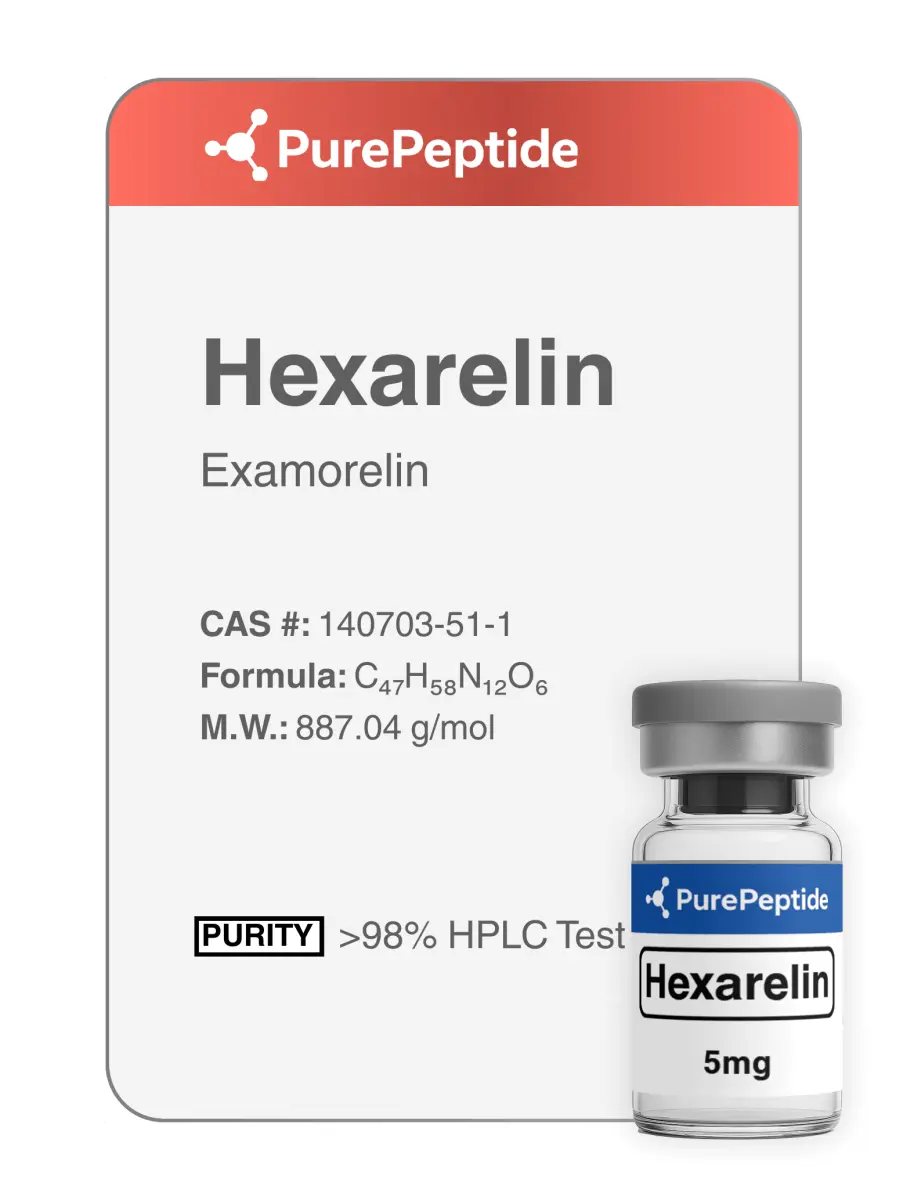
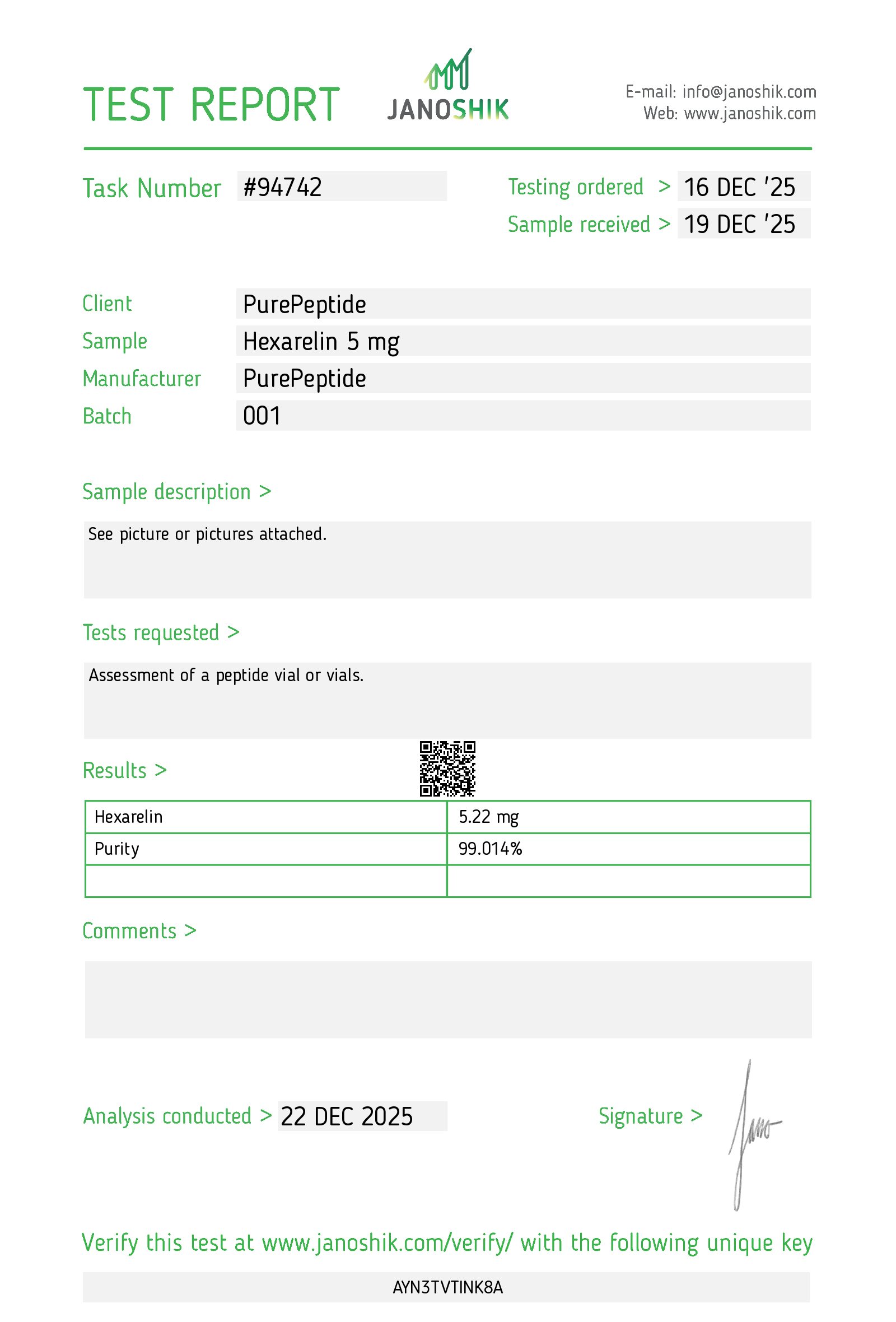
This product is intended solely for scientific and research use, as well as for use as a reference standard in HPLC analysis, and is not an approved medicinal product. It is not intended for the diagnosis, treatment or prevention of disease in humans or animals. It has not been approved by the FDA, the EMA or any national regulator. The information on this page is provided for scientific information purposes only and does not constitute medical advice, a recommendation for use, or any claim of clinical efficacy or safety.
Hexarelin – What the Peptide Is
Hexarelin is a synthetic hexapeptide from the group of growth hormone-releasing peptides. Similar to Ipamorelin and GHRP compounds, it acts on the ghrelin receptor rather than the GHRH receptor.
The molecule is among the earlier described representatives of the group and has been the subject of research since the 1990s. Structurally, it is a derivative of met-enkephalin, modified to acquire secretagogue activity.
Unlike Ipamorelin, Hexarelin is described as having a broader hormonal profile, including effects on other pituitary hormones – a feature that distinguishes it within the group.
Mechanism of Action
Binding to the ghrelin receptor in the pituitary gland activates a signaling pathway separate from that of the GHRH receptor, leading to the release of stored growth hormone.
Interaction with receptors outside the pituitary, including in cardiac muscle, has also been described. This line of research is separate from the secretagogue activity and is considered independently in the literature.
With prolonged administration, a decrease in response is described, attributed to reduced receptor sensitivity. This phenomenon is more pronounced compared to other compounds in the group.
Research Data and Observations
Observations track growth hormone concentrations following administration and compare the response with that of GHRH stimulation. It is noted that the two mechanisms are distinct and may act jointly.
A separate body of work examines cardiac effects observed in preclinical models. These studies are not directly related to the secretagogue function.
Effects on cortisol and prolactin are also reported, distinguishing the compound from the selective representatives of the group.
When interpreting published data, the difference between preclinical and clinical conditions should be considered. Results from cell cultures and animal models describe a mechanism but do not allow quantitative conclusions regarding human conditions.
Dosage ranges used in preclinical studies are often not directly translatable due to differences in metabolism between species. This limitation is consistently noted in review papers.
Example Calculations
The calculations below are solely mathematical examples illustrating the relationship between the total amount of substance, the volume of solvent, and the resulting concentration. They do not represent a dosing recommendation, administration schedule, or instructions for use.
When dissolving 2 mg with 1 ml of bacteriostatic water:
The resulting concentration is 2 mg/ml, with 0.50 ml containing 1 mg of substance.
Example values:
- 0.1 ml = 0.2 mg
- 0.2 ml = 0.4 mg
- 0.3 ml = 0.6 mg
- 0.4 ml = 0.8 mg
- 0.5 ml = 1 mg
When dissolving 5 mg with 2 ml of bacteriostatic water:
The resulting concentration is 2.5 mg/ml, with 0.40 ml containing 1 mg of substance.
Example values:
- 0.1 ml = 0.25 mg
- 0.2 ml = 0.5 mg
- 0.3 ml = 0.75 mg
- 0.4 ml = 1 mg
- 0.5 ml = 1.25 mg
Overview of Scientific Publications
The literature on Hexarelin is among the more extensive in the group due to its early description, but much of it originates from the period before the introduction of more selective analogs.
Review publications note that the results are not always directly comparable with contemporary studies due to differences in methodology.
Safety Data from the Studies
Described observations include effects on cortisol and prolactin, reactions at the administration site, and a short-lived sensation of hunger related to the ghrelin receptor.
The decrease in response with prolonged administration is described as a characteristic feature of the compound.
A general limitation of compounds in this category is the absence of long-term controlled human studies. Available information describes mechanism and short-term observations, not a safety profile for prolonged use.
The product is intended exclusively for research purposes. It is not a food, dietary supplement, or medicinal product, and is not intended for the diagnosis, treatment, or prevention of disease.