BPC-157 5mg/10mg
BPC-157 – pentadecapeptide of gastric origin, studied in relation to angiogenesis, cell migration and tissue repair. Price and batch analysis.
29.00 EUR · In stock
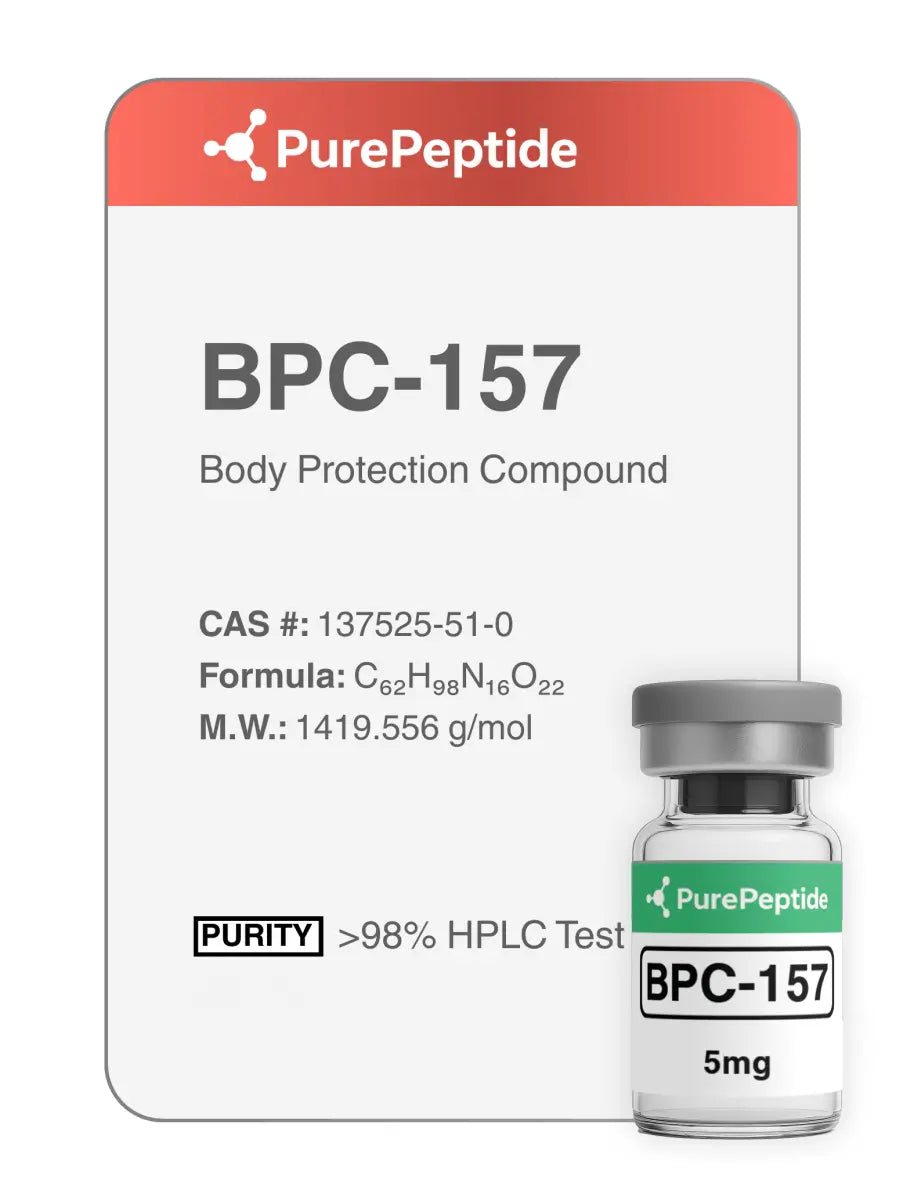
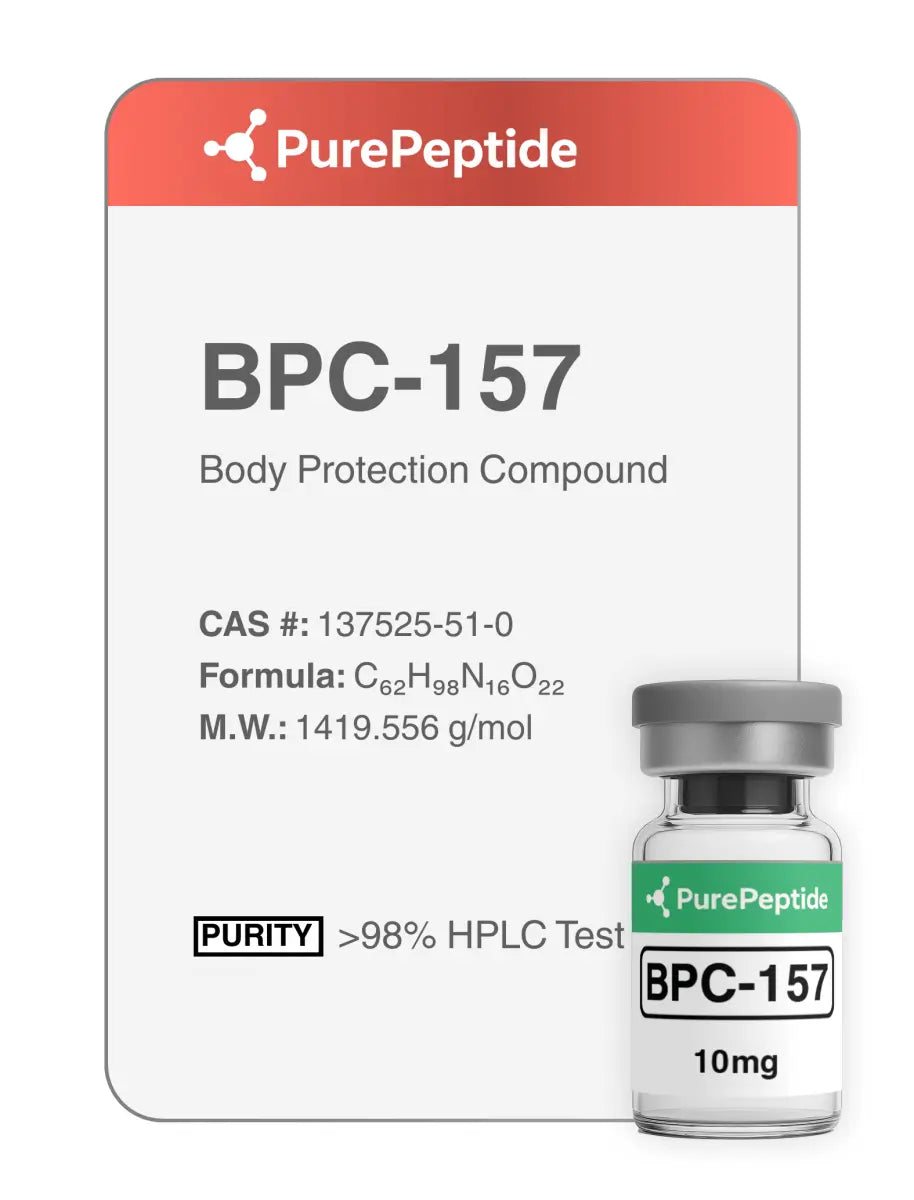
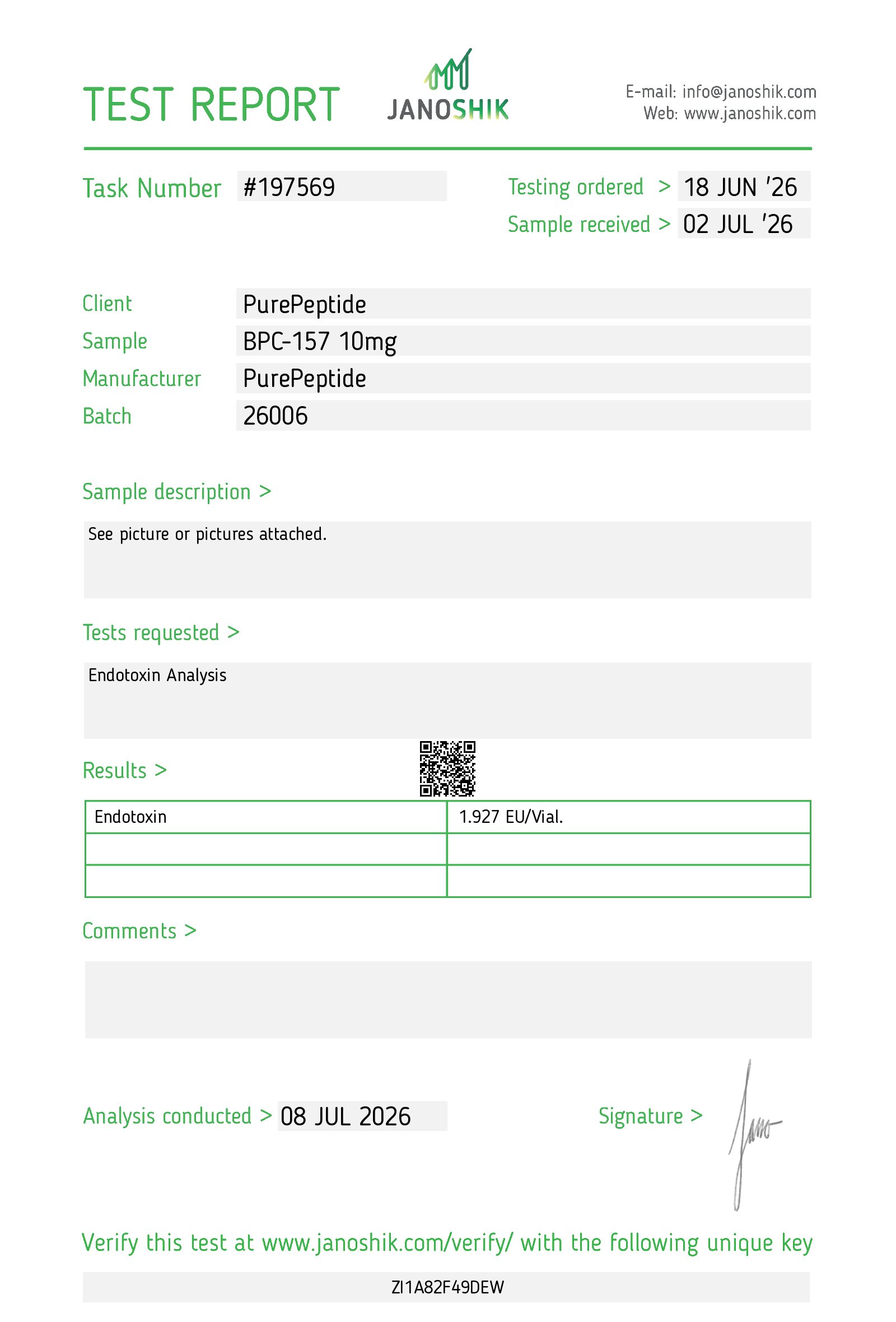
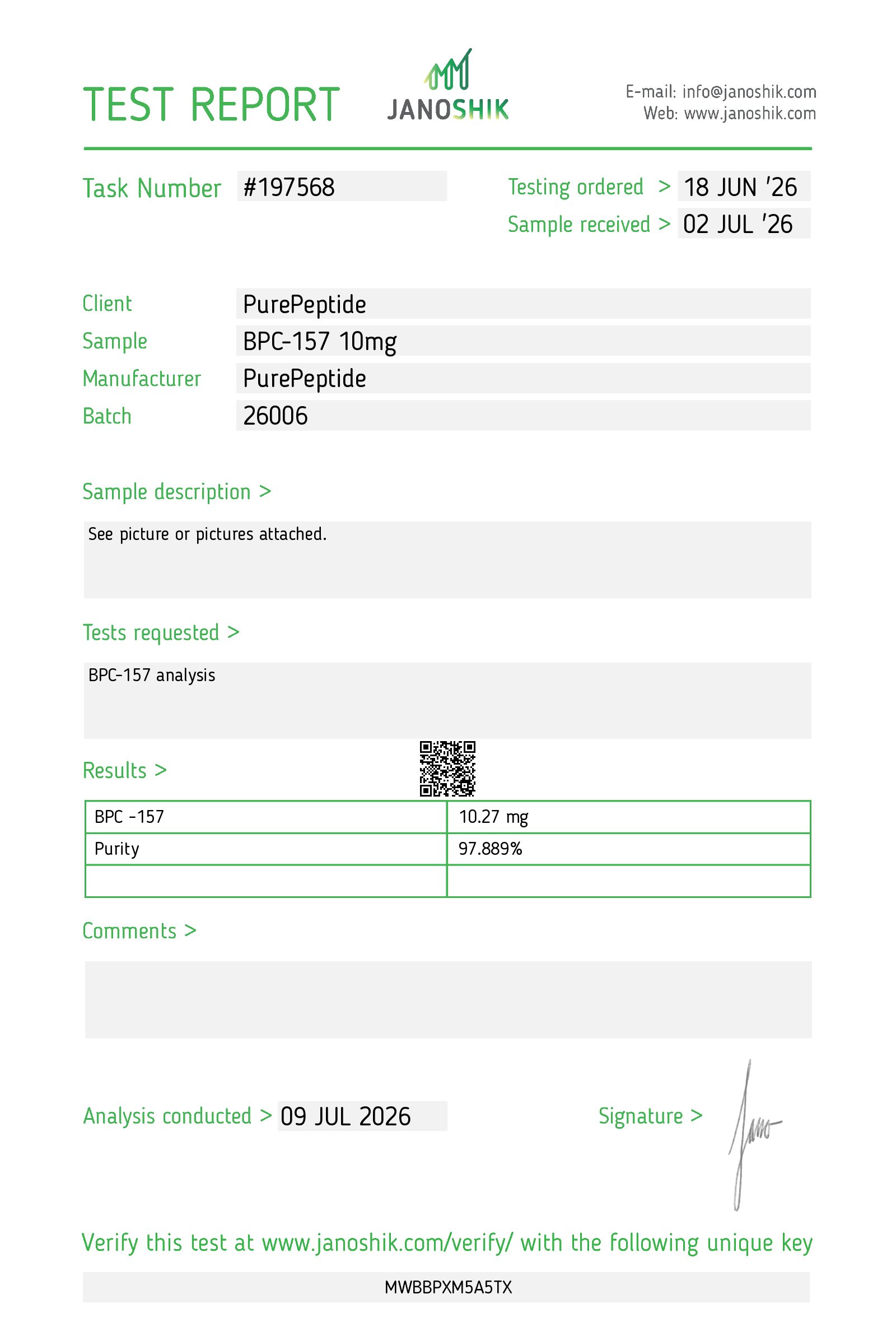
This product is intended solely for scientific and research use, as well as for use as a reference standard in HPLC analysis, and is not an approved medicinal product. It is not intended for the diagnosis, treatment or prevention of disease in humans or animals. It has not been approved by the FDA, the EMA or any national regulator. The information on this page is provided for scientific information purposes only and does not constitute medical advice, a recommendation for use, or any claim of clinical efficacy or safety.
BPC-157 – What is the peptide
BPC-157 is a synthetic peptide made up of 15 amino acids, whose sequence originates from a partial fragment of a protein isolated from gastric juice – referred to as the Body Protection Compound. Unlike the parent protein, this fragment displays unusual stability in an acidic environment, which is one of the reasons for the interest in it.
The molecule does not contain unusual amino acids and carries no additional chemical modifications. Its stability is attributed to the sequence itself rather than to protective groups added during synthesis.
Research interest in the compound is directed mainly at tissue-repair processes – the formation of new blood vessels, migration of cells toward the site of injury, and interaction with the extracellular matrix.
Mechanism of Action
The main line of explanation in the literature links the peptide to angiogenesis – the formation of new capillaries from existing vessels. Its effect on the vascular endothelial growth factor (VEGF) signaling pathway, a key regulator of this process, is discussed.
A second line examines the interaction with the nitric oxide system. Nitric oxide participates in the regulation of vascular tone and in tissue blood supply, linking it to the availability of oxygen and nutrients in the area of repair.
An effect on fibroblast migration and on the organization of collagen fibers – processes that determine the mechanical properties of newly formed tissue – is also described.
Research Data and Observations
Published observations cover models of damage to various tissues – muscle, tendon, ligament, and mucosa. Differences in the rate of recovery compared with control groups are reported, with assessment methodologies varying between studies.
A separate body of work examines the interaction with the gastrointestinal mucosa, which is also the origin of the parent protein. These observations are among the earliest in the field.
A significant feature is that a large portion of the available data originates from animal models. Translating them to human conditions remains an open question and is explicitly noted in most publications.
When interpreting published data, the difference between preclinical and clinical conditions should be taken into account. Results from cell cultures and animal models describe a mechanism but do not allow quantitative conclusions for human conditions.
The dose ranges used in preclinical studies are often not directly translatable due to differences in metabolism between species. This limitation is consistently noted in review papers.
Example Calculations
The calculations below are purely mathematical examples showing the relationship between the total amount of substance, the volume of solvent, and the resulting concentration. They do not represent a dosing recommendation, an administration schedule, or instructions for use.
When dissolving 5 mg with 2 ml of bacteriostatic water:
The resulting concentration is 2.5 mg/ml, with 0.40 ml containing 1 mg of substance.
Example values:
- 0.1 ml = 0.25 mg
- 0.2 ml = 0.5 mg
- 0.3 ml = 0.75 mg
- 0.4 ml = 1 mg
- 0.5 ml = 1.25 mg
When dissolving 10 mg with 2 ml of bacteriostatic water:
The resulting concentration is 5 mg/ml, with 0.20 ml containing 1 mg of substance.
Example values:
- 0.1 ml = 0.5 mg
- 0.2 ml = 1 mg
- 0.3 ml = 1.5 mg
- 0.4 ml = 2 mg
- 0.5 ml = 2.5 mg
Overview of Scientific Publications
The literature on BPC-157 is relatively extensive in terms of number of publications but concentrated among a limited circle of research groups. This circumstance is noted in review articles as a factor requiring attention when summarizing results.
Large-scale independent clinical trials are lacking, which places the available data mostly within the preclinical domain.
Safety data from studies
Systematic data on the tolerability profile in humans have not been published. Available observations originate from animal models, in which no pronounced adverse effects are described within the studied ranges.
The absence of long-term data is the main limitation in interpreting the literature and is consistently noted in review publications.
The general limitation for compounds in this category is the absence of prolonged controlled studies in humans. The available information describes mechanism and short-term observations, not a safety profile for long-term use.
This product is intended exclusively for research purposes. It is not a food, dietary supplement, or medicinal product and is not intended for the diagnosis, treatment, or prevention of any disease.